
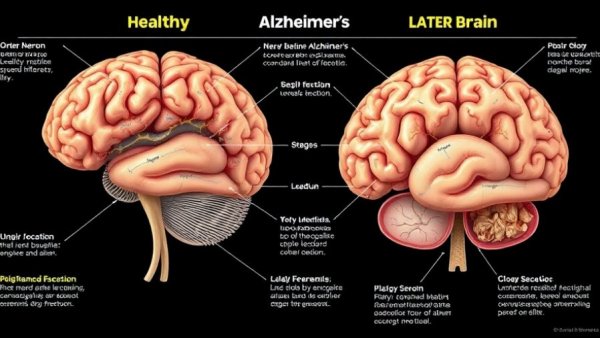
Revolutionary Blood Test for Alzheimer's: An Early Warning
The journey into understanding Alzheimer's disease is shifting, with new research suggesting that a simple blood test could potentially identify the disease years before overt symptoms manifest. This change is highlighted by findings discussed at a recent Alzheimer's Association conference in London, emphasizing that elevated levels of specific proteins can predict cognitive decline up to a decade in advance.
Understanding the Science Behind Alzheimer’s Risk
The biomarkers in question, amyloid and tau proteins, are central to the development of Alzheimer's. Recent studies showed that measuring phosphorylated tau 217 (p-tau217) in the blood of cognitively healthy individuals provides compelling insights into their cognitive health trajectories. For example, individuals with high p-tau217 levels had a 38% chance of developing cognitive impairment within five years, escalating to a staggering 78% chance within a decade.
Implications for Early Intervention and Care
If validated through clinical trials, this simple testing method could standardize screening for Alzheimer's risk in primary care settings. Dr. Adam Boxer, a respected figure in neurology, emphasizes that such a proactive approach might reshape the medical community’s practices regarding early Alzheimer’s diagnosis and intervention, particularly through anti-amyloid treatments tailored for high-risk individuals. This could lead to a paradigm shift in how healthcare providers assess cognitive health, moving from reactive to preventive care.
Enhancing Caregiver Support with Early Detection
Understanding Alzheimer's risk not only benefits individuals but also significantly aids caregivers and families. In communities like Muskegon, where senior care solutions are paramount, early detection can transform how families approach long-term health coverage and support services. Access to resources like cognitive care facilities and dementia assistance centers becomes crucial as early signals are identified, enabling better planning and emotional support. Educating families on managing potential cognitive decline can empower them to create a supportive home environment.
Local Community Resources and Support Systems
For those navigating Alzheimer’s and dementia within Muskegon, numerous programs and assistance options are available. From elder services offices to community pools of information about insurance options related to senior care, families can find guidance. Initiatives like support caregiver communication and emotional support groups play a vital role in this journey, fostering a sense of community among those affected. Local libraries and community centers often host educational seminars that can inform family members about the latest research in Alzheimer’s care and provide them with the tools needed to support loved ones effectively.
Future Trends: The Path Ahead
As science progresses and these tests become more commonplace, the future of Alzheimer's care appears brighter. Ongoing studies will refine our understanding of these biomarkers, potentially leading to the establishment of standard practices in healthcare. The benefits of such developments can extend well beyond testing; they may also result in comprehensive care strategies that prioritize patient longevity and the quality of life for both patients and their families. Moreover, as awareness increases, communities may experience a rise in funding for research, leading to innovative treatments in the broader context of neurodegenerative diseases.
Conclusion: Empowering Action in Alzheimer’s Care
With the prospect of simple blood tests heralding a new era in Alzheimer's detection, it is imperative that communities invest in supportive infrastructures for affected individuals and their caregivers. Muskegon’s resources, including financial aid for Alzheimer’s and practical advice for caregivers, are vital components in navigating this complex journey. Recognizing the signs early can catalyze essential conversations and proactive measures, ultimately shaping a more informed, supportive environment for all involved. As we look to the future, the integration of research findings into community programs can help ensure that individuals and families are equipped with the knowledge and resources required to navigate Alzheimer's with dignity and hope.





Write A Comment